Georgian Bars: Crucial Design Mistakes to Avoid
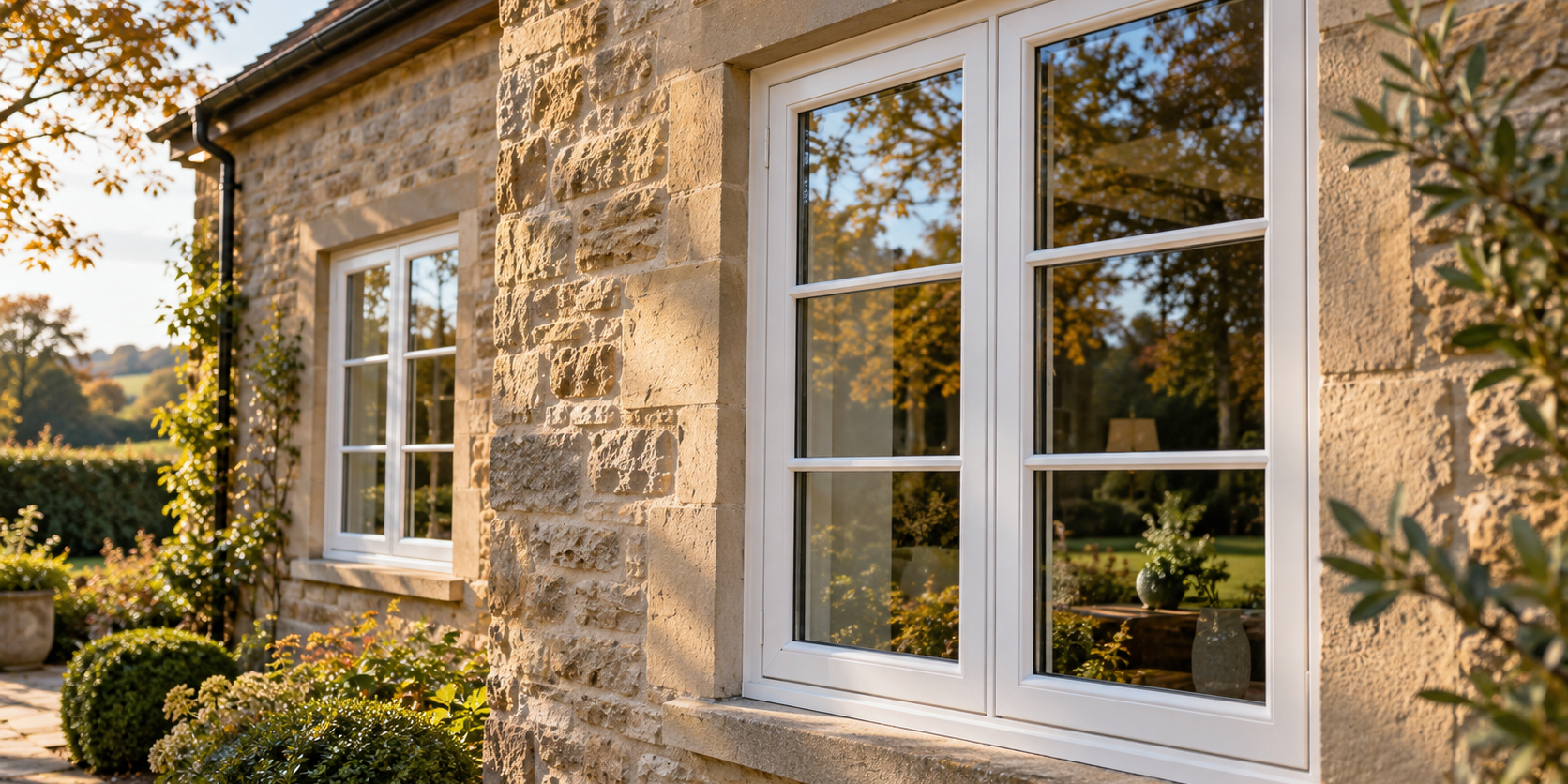
Georgian bars can change the character of a window without changing the size of the opening. Their arrangement creates a pattern across the glass, helping a plain window feel more detailed and traditional.
However, a design that looks attractive in a brochure may feel too busy on your own home. Bar spacing, colour and the relationship with opening sections all affect the finished appearance.
The decision deserves more attention than choosing a grid and applying it to every window.
At Glass Tec Windows, Georgian bars are among the decorative options available within our double glazed window range. Before settling on a design, work through these seven mistakes to avoid.
1. Ordering Georgian bars without confirming their construction
Start by establishing exactly what the supplier means by the name.
In modern double glazing, internal Georgian bars commonly sit between the panes of glass. They create a divided appearance while leaving the accessible glass surfaces smooth.
Surface-mounted astragal bars create a different effect. These sit on the glass surfaces and add visible depth. Some designs also include matching components inside the glazing unit to strengthen the impression of separate panes.
Roseview’s explanation of glazing bars distinguishes between internal bars within the sealed unit and astragal bars fitted to the glazing surfaces.
Terminology can vary, so a product name alone is not enough to confirm what you will receive.
Ask to see a sample or a close-up photograph showing:
- Where the bars sit in relation to the glass.
- Their width and profile.
- How the intersections are formed.
- Their appearance from inside and outside.
An internal grid and a raised surface detail can look similar in a small photograph but noticeably different when viewed close up.
Confirm which construction is available for your chosen window system before approving the order.
2. Copying a pattern from a differently shaped window
A decorative pattern depends on the proportions of the glass around it.
Imagine one vertical bar and two horizontal bars dividing a tall pane into six rectangles. Transfer the same arrangement to a short, wide pane and those rectangles become much wider.
The number of divisions is unchanged, but the overall effect is different.
This is why choosing Georgian bars from an isolated catalogue image can be misleading. The example window may have very different dimensions from yours.
Instead, ask for the pattern to be shown on a drawing of the proposed window.
Look at the shape of each resulting section. Does it feel balanced? Are the divisions too narrow at the edges? Does a small top opening become crowded once extra bars are added?
For a house with several window sizes, a coordinated appearance may require different arrangements. Repeating exactly the same grid everywhere is not always the best way to achieve consistency.
Start with the most prominent front window, establish the appearance you like, and then consider how that design translates to the other openings.
3. Confusing decorative bars with the window’s main divisions
A window may already contain fixed divisions separating its glazed sections.
A vertical frame member is commonly called a mullion. A horizontal member is a transom. These form part of the window layout and are different from a decorative grid within or across the glazing.
Georgian bars add another set of lines.
If those lines are chosen without considering the frame divisions, the result can become visually crowded. A horizontal decorative bar may sit awkwardly close to a transom, or the grids in adjacent panes may appear unrelated.
Review both elements together.
For example, a window with two opening sections and a fixed centre pane needs a design that considers all three glazed areas. Approving the centre pattern alone will not show the complete result.
Ask for drawings that clearly distinguish:
- The outer frame.
- Fixed vertical and horizontal divisions.
- Opening sections.
- Decorative glazing bars.
Then look at the window from a distance, as you would from the pavement or garden.
For more background on the frame itself, read our guide to window sightlines. Once those main divisions are understood, the decorative pattern becomes easier to judge.
4. Choosing a finish without seeing it beside the frame
White bars against a white frame may seem straightforward. Other combinations deserve a closer look.
A dark frame, cream finish or wood-effect surface can make the colour and texture of the bars more noticeable. Even similar colours may look different when their surfaces reflect light differently.
Do not assume that a colour name guarantees an identical appearance across every component.
Ask which finishes are available for the particular bar system and glazing combination being quoted.
Where possible, compare the frame and bar samples together in daylight. Look at them from both sides, especially if the interior and exterior frame finishes differ.
For Georgian bars inside a sealed unit, ask how the finish will appear through the glass. Reflections and viewing angles can influence what you notice.
It also helps to decide whether you want the bars to blend into the frame or stand out as a deliberate feature. Both can work, but the choice should be intentional.
Record the agreed finish in the specification. A photograph can support the discussion, while the written product reference identifies what is being ordered.
5. Judging Georgian bars only from the street
The outside appearance matters, but you will also look through these windows every day.
A grid that adds character to the front elevation may cross a favourite garden view. A horizontal line that looks balanced outside may sit directly across your view when you are seated indoors.
Before approving Georgian bars, consider the room’s normal viewing positions.
Stand where you prepare food, sit where you read, and look out from the dining table. The most important view may be lower than the centre of the window.
Ask to compare a simpler arrangement with the more detailed option. You might prefer decorative treatment in selected panes, fewer divisions or a different layout altogether, subject to the chosen system.
A useful design discussion starts with a specific observation:
“The view of the garden matters most from this chair.”
That gives the supplier something practical to consider.
Also remember that decorative bars do not turn clear glass into privacy glass. If overlooking is a concern, discuss the glazing separately rather than expecting the grid to obscure the room.
6. Forgetting how the glass will be cleaned
The position of the bars affects the surfaces you need to clean.
With internal Georgian bars, the decorative components sit inside the sealed glazing unit. You clean the accessible glass surfaces without having to wipe around raised bars on those surfaces.
Surface-mounted designs introduce edges and intersections. Ask the supplier how those details should be cleaned and which products or methods are appropriate.
Neither appearance nor maintenance should be judged from a photograph alone.
Consider where the window is located. An easily reached ground-floor pane presents a different practical situation from an upstairs window above an extension.
Discuss access to both sides of the glass as part of the window design. The opening arrangement and surrounding building features matter as well as the decorative treatment.
Avoid assuming that raised bars can be removed whenever you want to clean behind them. Their attachment and maintenance requirements depend on the product.
A sample is useful here: it lets you see the detail you will be living with, including the corners and joins that a distant photograph can hide.
7. Approving the order without a complete bar layout
“White windows with Georgian bars” is not a sufficiently detailed description of a finished design.
It leaves room for uncertainty about the number of divisions, their positions, bar width, finish and which panes receive the treatment.
Before manufacture, ask for the decorative layout to appear on the drawings for each relevant window.
Check the drawings against the current quotation. If you have changed the pattern during discussions, make sure the final documents show that revision.
Your approval checklist should include:
| Detail | What to confirm |
|---|---|
| Bar construction | Internal, surface-mounted or another specified arrangement |
| Layout | Number and position of divisions in each pane |
| Width and profile | The agreed bar dimensions and shape |
| Finish | Colour and appearance from both sides |
| Window reference | Which opening each drawing describes |
| Viewing direction | Whether the drawing shows the inside or outside |
| Glazing | The glass specification included in the quotation |
| Revision | The latest agreed version of the design |
For a bay window, review the centre and side sections together. For several front windows, request a combined view where possible.
Keep the approved drawings with your order records. They will also be useful if you discuss a matching window later.
A simple way to compare two designs
Suppose you are replacing the windows at the front of a stone semi-detached house.
You like a detailed grid in a supplier’s photograph, but your home has a wide downstairs window and narrower upstairs openings.
Ask for two proposals using the same frame layout.
The first could show the fuller decorative pattern. The second could use fewer divisions, adjusted to suit each opening.
Compare the proposals against three questions:
- Do the windows look balanced together?
- Does the pattern suit the individual panes?
- Are you happy with the view from inside?
This keeps the comparison focused. Changing the frame colour, opening arrangement and bar layout simultaneously makes it harder to identify which detail you actually prefer.
There is no need to choose the most elaborate design. The right arrangement is the one that suits the house and remains pleasing in everyday use.
Frequently asked questions about Georgian bars
Are Georgian bars the same as astragal bars?
The terms are sometimes used loosely, but the construction can differ. Internal bars sit between the panes, while astragal designs commonly include bars on the glass surfaces. Ask the supplier to identify the exact arrangement being quoted.
Can Georgian bars be added to existing double glazing?
Bars fitted inside a sealed unit are enclosed during its manufacture. Adding that internal arrangement is therefore not a simple surface alteration to an existing unit. Ask the supplier whether a replacement glazing unit is suitable and what other options are compatible with the window.
Do decorative bars mean the window contains lots of separate panes?
Not necessarily. Modern decorative systems can create the appearance of smaller panes across a larger glazing unit. Confirm the construction if this distinction matters to your design.
Do all the windows need the same pattern?
No. Different opening sizes may suit different layouts. Aim for a coordinated appearance, with proportions that work for each window, rather than automatically repeating one grid.
Can I choose Georgian bars with uPVC windows?
Yes, decorative bar options are available with suitable uPVC window configurations. Glass Tec lists Georgian bars within its double glazed window options. Confirm the available construction, finishes and layouts for the specific system you are considering.
Discuss your window design with Glass Tec
Choosing Georgian bars is easier when you can compare the complete window, understand the construction and see the proposed pattern at the right proportions.
Bring photographs of your home and examples of the designs you like. Include a view of the whole frontage as well as individual windows so the discussion considers how everything fits together.
Explore Glass Tec’s double glazed windows or contact our team to discuss decorative glazing options for your home.
A clear drawing and an agreed specification can help turn a promising idea into a window design you are happy to live with.